The Eatwell Guide
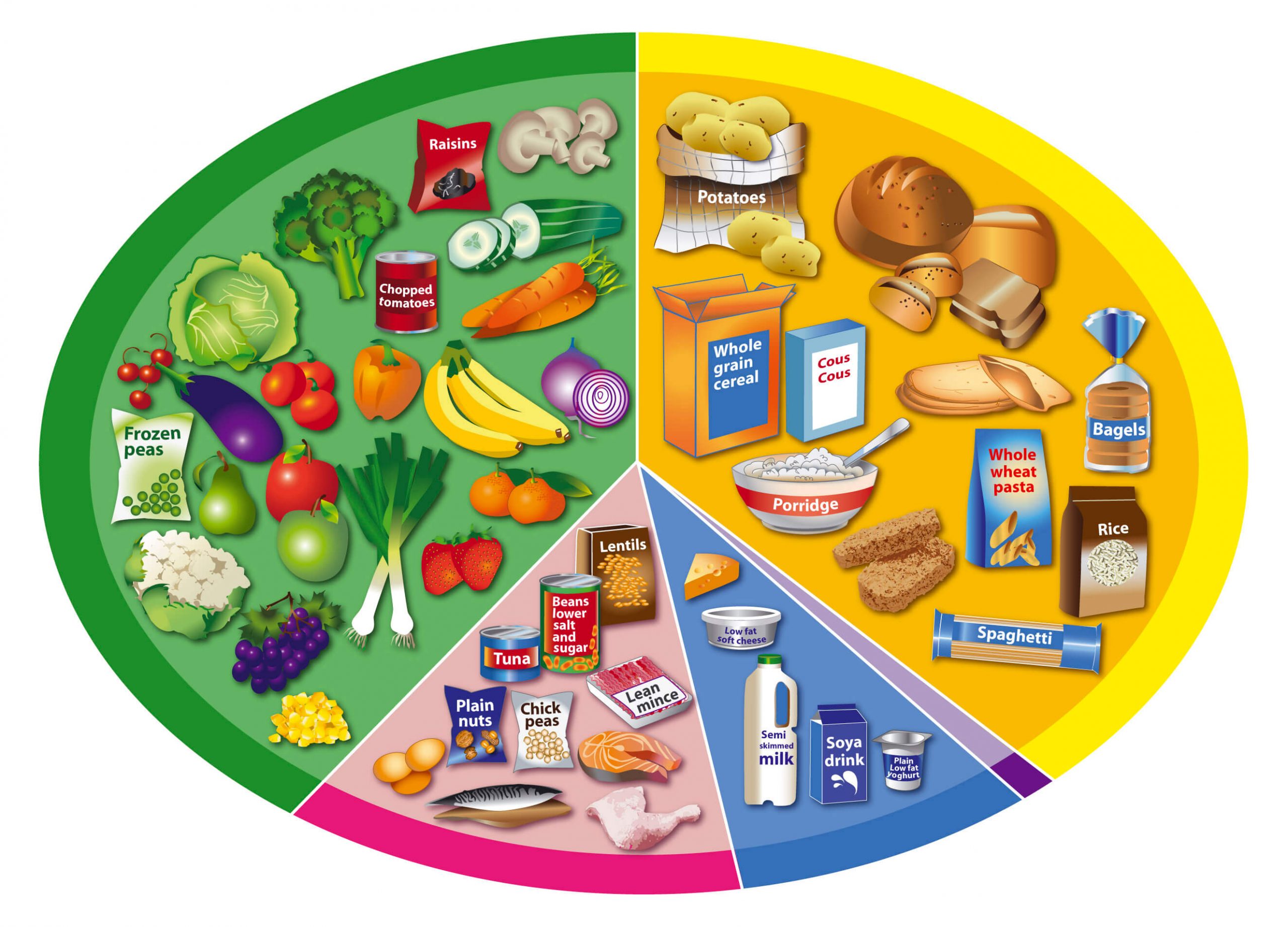
No food on its own contains all the essential nutrients the body needs to stay healthy and work properly. Therefore, our diets should contain a variety of different food groups, to ensure we get a wide range of nutrients. This is illustrated by the UK’s healthy eating model – the Eatwell Guide.
The Eatwell Guide was developed by the Department of Health1 . It shows how much of what we eat overall should come from each food group to achieve a healthy, balanced diet. The proportions shown are representative of your food consumption over the period of a day or even a week, not necessarily each mealtime.
What does a healthy balanced diet look like?
See below the different different types of foods and drinks we should be consuming, and in what quantities, to achieve a healthy, balanced diet.
Information and images from Gov.uk.
Click on the image to learn more
The Eatwell Guide
The Eatwell Guide can apply to most people regardless of weight, dietary restrictions/preferences or ethnic origin.
It does not apply to children under the age of 2 as they have different nutritional needs. Anyone with a special dietary requirement or medical condition should check with a registered dietitian on how to adapt the Eatwell Guide to meet their individual needs.
The Eatwell guide splits the foods and drinks we consume into five main food groups (see below), each in different proportions. Each group provides different essential nutrients; it is therefore important to opt for a variety of different foods from each group to ensure we get all the nutrients our bodies need to function and stay healthy.
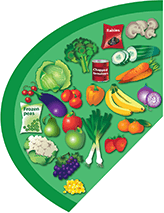
Fruit & vegetables
Fruit and veg should make up just over a third of the food you eat each day.
Aim for at least five portions of a variety of fruit and veg every day. Choose from fresh, frozen, canned, dried or juiced.
Good to know
A portion is 80g or any of these: 1 apple, banana, pear, orange or other similar-size fruit, 3 heaped tablespoons of vegetables, a dessert bowl of salad,
30g of dried fruit (which should be kept to mealtimes) or a 150ml glass of fruit juice or smoothie (counts as a maximum of one portion a day).
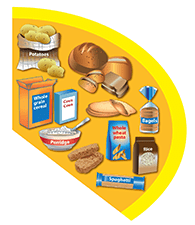
Potatoes, bread, rice, pasta and other starchy carbohydrates
Starchy foods are an important part of a healthy diet and should make up just over a third of the food we eat. They are a great source of energy and the main source of a range of nutrients in our diet.
However, it is important to choose higher-fibre, wholegrain varieties such as wholewheat pasta, brown rice, or simply leave the skins on potatoes. Wholegrain varieties contain more fibre than white or refined starchy food and we digest them more slowly, which means we are likely to feel fuller for longer. They also helps keep your digestive system healthy.
It is also possible to purchase high fibre white versions of bread and pasta which will help to increase your fibre intake.
Some people believe that starchy foods are fattening, but gram for gram they contain less than half the calories of fat.
Good to know
Aim to have 30g of dietary fibre each day.
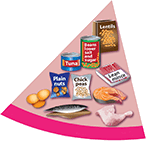
Meat, fish, beans, pulses, eggs and other proteins
These foods are all sources of protein, vitamins and minerals.
Beans, lentils and peas are great alternatives to meat as they are naturally low in fat and high in fibre. Pulses, or legumes, are edible seeds that grow in pods and include foods like lentils, chickpeas, beans and peas. Other vegetable-based sources of protein include tofu, bean curd and mycoprotein; all of which are widely available in most retailers.
Aim to eat at least two portions (2 x 140g) of fish a week, including at least one portion of oily fish such as salmon or mackerel. There are recommended limits for oily fish, crab, and some types of white fish. For more information on fish see here.
Some meats are high in fat, especially saturated fat. The type of cut or meat product you choose, and the way you cook it, makes a difference. Choose lean cuts of meat, cut the fat and skin off, grill meat and fish instead of frying and boil or poach eggs rather than frying them.
Good to know
Keep your red and processed meat consumption to a maximum of three days a week, with no more than 70g per day. Processed meat includes sausages, bacon, cured meats and reformed meat products.
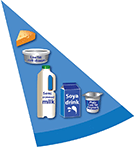
Dairy & alternatives
It is important to have some milk and dairy foods (or dairy alternatives), such as cheese, yoghurt and fromage frais. They are a good source of protein and vitamins, and are also important sources of calcium, which helps to improve our bone density and keep bones healthy.
However, some dairy foods can be high in fat and particularly saturated fat, although there are lower-fat options available. Choose lower fat and lower sugar products where possible. For dairy alternatives choose unsweetened, calcium-fortified versions.
Good to know
Try 1% fat milk instead of semi-skimmed milk? It contains about half the amount of fat.
You could also try reduced fat cheese, or just eat smaller portions of the full-fat varieties less often.

Oils & spreads
Some fat in the diet is essential; however, we are generally eating too much saturated fat and need to reduce our consumption.
Unsaturated fats are healthier – they are usually found in plant sources and in liquid form as oil, for example vegetable oil, rapeseed oil and olive oil.
Swapping saturated fats for unsaturated fats will help to reduce cholesterol in the blood, therefore it is important to get most of our fat from unsaturated oils.
One easy swap is choosing lower fat spreads, as opposed to butter. This will help to reduce your saturated fat intake.
Remember that all types of fat are high in energy and should be eaten sparingly.
Good to know
Fat is a source of essential fatty acids, which the body cannot make itself. It helps the body absorb vitamins A, D and E. Find out more about the best type of fats to include in your diet here.

Foods high in fat, sugar and salt
This includes foods such as chocolate, biscuits, cakes, butter, full-sugar soft drinks and ice-cream.
These foods are not needed in the diet and should therefore be eaten as treat, infrequently and in small amounts. Food and drinks high in fat and sugar contain lots of energy, particularly when you have large servings.
Check the label on food packaging and use the traffic light system to pick products that are green for fat, sugar and salt, this means they are low in these nutrients, this will help you avoid these unhealthy foods.
Good to know
Check the label on food packaging and use the traffic light system to pick products that are green for fat, sugar and salt, this means they are low in these nutrients, this will help you avoid these unhealthy foods.
See below for more information on food labelling.

Hydration
Aim to drink 6-8 glasses (2 litres) of fluid every day.
Water, lower fat milk, sugar-free drinks including tea and coffee all count towards your consumption.
Swap sugary soft drinks for diet, sugar-free or no added sugar varieties to reduce your sugar intake in a simple step. Checking the nutrition labels on soft drinks such as fruit juices and fizzy drinks can help you make healthier choices. See more information on food labelling below.
Alcohol also contains lots of calories, it should be limited to no more than 14 units per week for both men and women. The calorific content of an alcoholic beverage depends on the type of alcohol, the volume served and the addition of mixers. For example, 1 pint of standard strength lager contains approximately 136kcal, a 175ml medium glass of wine contains approximately 135kcal and a 25ml shot of spirit (40% vol) contains approximately 56kcal.
Good to know
Fruit juice and smoothies also count towards your fluid consumption.
Limit fruit juice and/or smoothies to a total of 150ml a day as they contain free sugars which can damage teeth. Free sugars are any sugar added to food or drink products by the manufacturer, cook or consumer including those naturally found in honey, syrups and unsweetened fruit juice.
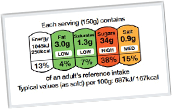
Food labelling
Lots of pre-packaged foods have a food label which shows the nutrition information per serving. The label also refers to ‘reference intake’, which tells you how much of each nutrient you should be eating each day as part of your daily diet. The percentage refers to the contribution that the product makes to the reference intake for each nutrient.
Food labels can help you pick foods that are lower in fat, saturated fat, sugar and salt. Some labels use the colour-coded traffic light system, which lets you tell at a glance if they have a high (red), medium (amber) or low (green) content.
To make healthier choices, pick products with more greens and ambers and fewer reds.
For more information on food packaging and labelling please see the Food Standards Agency website.
Good to know
Remember that the portion sizes used on the label are suggestions and may not be the same for each individual. For example, some foods and drinks commonly consumed as single servings have the nutritional information presented per half pack.